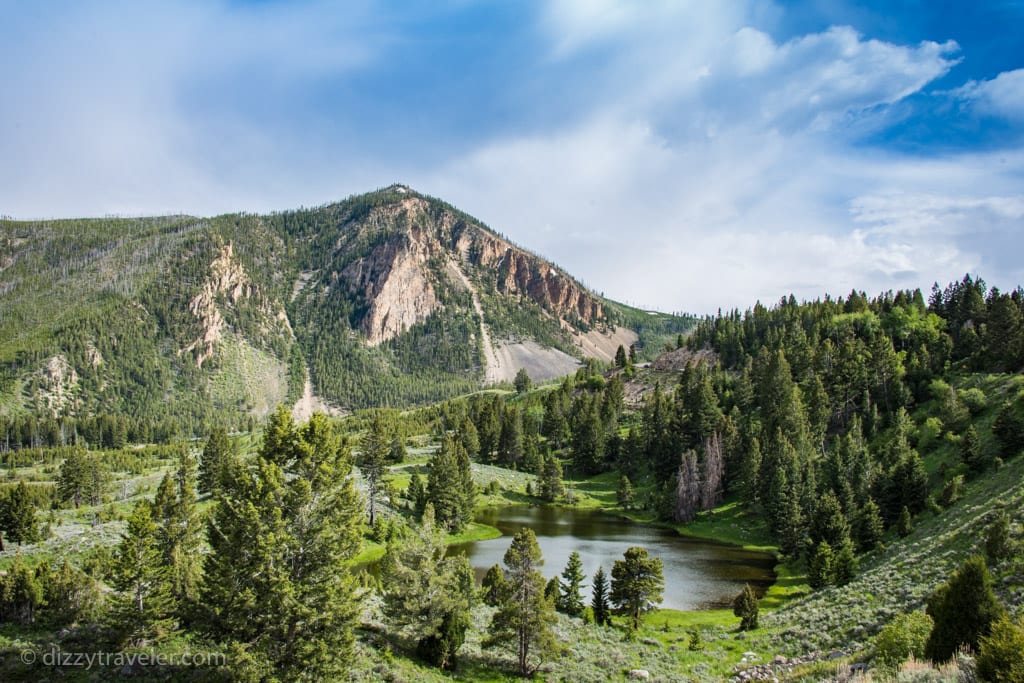
Yellowstone National Park is one of the most popular parks in America, established back in 1872. Ninety-six percent of Yellowstone NP is located within Wyoming; a portion of the park spreads into Montana and Idaho too. There are entrance from Teton National Park in the south and Cody in the east. Many visitors stay just outside of the park in West Yellowstone, Montana, and enter through the west gate. The National park is nearly 3,500-sq miles wilderness recreation area atop a volcanic hot spot, an exceptional blend of natural beauty, grand peaks, dramatic canyons, alpine rivers, lush forests, hot springs, plentiful wildlife, and the world’s most great collection of geysers.
Yellowstone has plentiful wildlife as famous as its geysers, in the northern range, they have more than 7500 square km (3000 square miles) of habitat.
Helpful Information
Best Time To Visit
Yellowstone National Park can be visited at any time of the year, but it all depends on individual interests. Most importantly, the park offers something for everyone, not to mention fantastic wildlife viewing opportunities are available at any time of the year. In spring (March and April), as bears emerge from hibernation, and many of them can often be seen roadside grazing until summer when they start to migrate to higher elevations to avoid the summer heat. On the other hand, winter is a great time form a different perspective like a great time to watch wolves as they’re out of their dens and more visible on a snowy landscape.
Summer in Yellowstone
Summer is the road trip season busiest period, also a pleasant time of the year to visit the National Park; therefore, make your activity and hotel reservations as early as possible.
June – August daytime high reaches about 73 F / 22 C and falls as low as 34 F / 1 C at night.
Fall in Yellowstone
Fall weather remains comfortable during the day, but start getting chilly in the evening. The colorful foliage and wildlife-watching opportunities in Yellowstone National Park are among the main attractions during this season. Visitors have better chances to observe wildlife during this season, especially in the early morning and at dusk. Visitors will witness elevated activities of black bears and grizzlies as they prepare for winter hibernation.
September – November daytime high reaches about 62 F/16 C and falls as low as 13 F / -10 C at night.
Winter in Yellowstone
In winter, most roads in the park are closed; therefore, self-driven activities are minimal. Visitors can travel using show coaches or snowmobiles with an authorized guide. Moreover, in winter, the park becomes a snow-covered wonderland that allows visitors to cross-country ski or snowshoe on miles of guided trails, watch bison trudge through the snow or simply escape for a quiet and majestic retreat.
March-May daytime high reaches about 46 F/8 C and falls as low as 10 F/-10 C at night.
Spring in Yellowstone
As most of the roads are being opened by Memorial Day weekend, the park could be enjoyed without making a dent to your wallet. Spring is an excellent season for Hikers as well as for wildlife lovers and photographers.
46 F / 8 C 10 F/ -10 C
By Air
Yellowstone Airport (WYS) is the nearest airport to Yellowstone, only about a mile north of the West Yellowstone or about 2 miles from the National Park west entrance. This airport has seasonal commercial flights between May through mid-October on Delta Airlines connecting Salt Lake City.
Jackson Hole Airport (JAC) is only 57 miles (an hour drive) from Yellowstone southern entrance located right in Grand Teton National Park in Jackson. There are Delta, American and United flights to and from Jackson Hole Airport.
Bozeman Yellowstone International (BZN) is located about 87 miles north of West Yellowstone. There is multiple airlines service to and from this airport such as Alaska, American, Delta, Allegiant, JetBlue, Frontier, and United.
Air tickets to the airports surrounding the parks can be expensive, so my trip to Yellowstone National Park started from Los Angeles (LAX) to Salt Lake City (SLC) from there driving to Idaho Falls and then to Yellowstone via Mesa Falls. The drive on Highway 15 was smooth and picturesque.
Getting Around in Yellowstone National Park
During the summer, cars are a convenient way to move around Yellowstone. The grand loop around the Yellowstone is enormous, about 142 miles that connect most of the gem, from Old Faithful, Mammoth Hot Springs, Tower Falls, Norris Geysers, and Canyon Village. Inside the park speed limit is 45 so easily you will need at least 2 days to cover them all.
[wpgmza id=”19″]
Winter in Yellowstone is absolutely gorgeous, but most of the roads inside the park are closed, and wheeled vehicles are not allowed except the north entrance. And rest of the park can be accessed only by cross country skies, snow coaches, or snowmobiles.
Safety Tips
Here are some helpful tips that may help to explore the wilderness of Yellowstone National Park.
- Never go off the trails; it could be dangerous and often leads to an accident, particularly in hydrothermal areas.
- It’s good to inform someone about your day plans like your destination, route, and expected return.
- Always carry water, warm clothing, a raincoat, a hat, sunscreen, insect repellent, and a first aid kit.
- Before planing a hike, stop by the visitor center to gather information on trail conditions, maps, and area closures. While hiking stay alert, carry bear spray, also know how to use it, hike in groups of three or more, and remember you are traveling in a bear country.
- Lightning storms are frequent in summer, so avoid elevation, isolated trees, and open areas.
- You must stay at least 100 yards (91 m) away from bears and wolves, and at least 25 yards (23 m) away from all other animals—including birds.
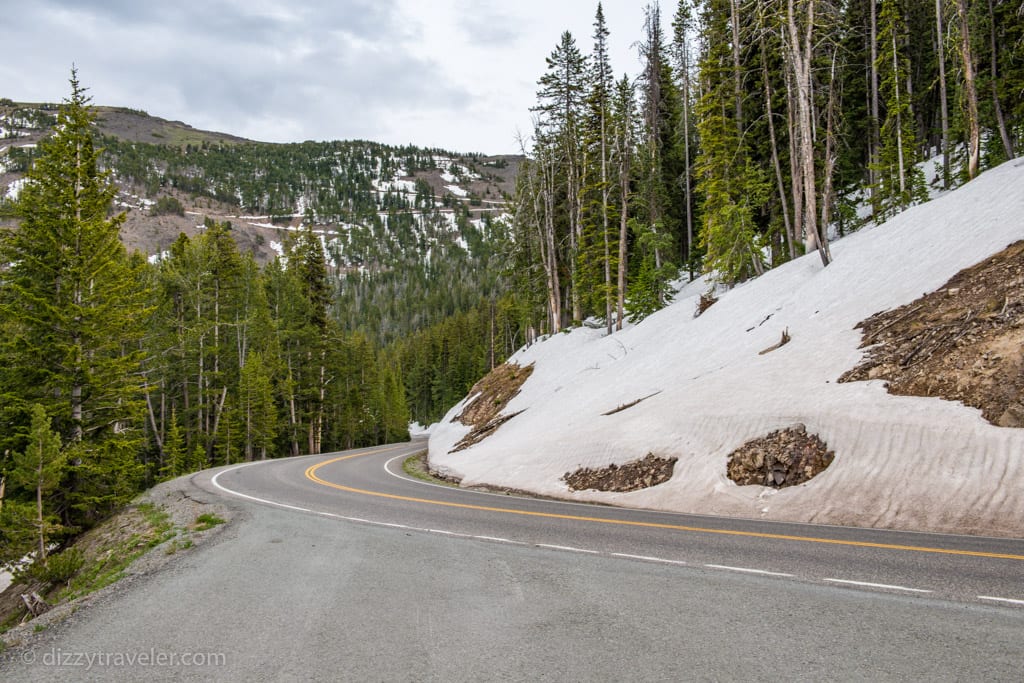
- Before planning a trip, it essential to know that most of Yellowstone’s trails are more than 7000 feet above the sea level. Therefore, most areas remain show-covered until late May or early June, and passes are snow-covered until July.
Places To Visit
Most of Yellowstone Park has something for everyone as it offers a variety of activities for visitors to experience. From exploding geysers, boiling mud holes, many colorful hot springs, steaming sulfur pits, grand canyons filled with waterfalls, and plenty of wildlife roaming around the magnificent landscape, and your experience will definitely exceed your expectations.
Visit Mammoth Hot Springs
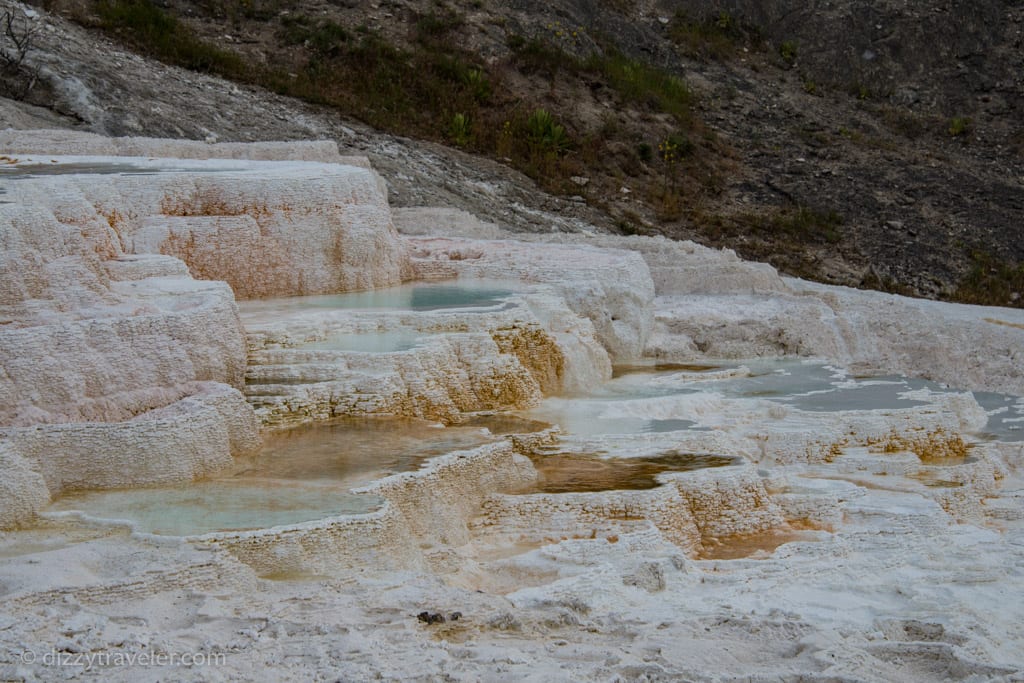
Mammoth Hot Springs is a must-see site of Yellowstone National Park in part because they’re so different from other thermal features in the area. It is located just south of the North Entrance to the National Park. This area is accessible by car year-round. The upper and lower terraces can be explored using the 1.75 miles of boardwalks around them.
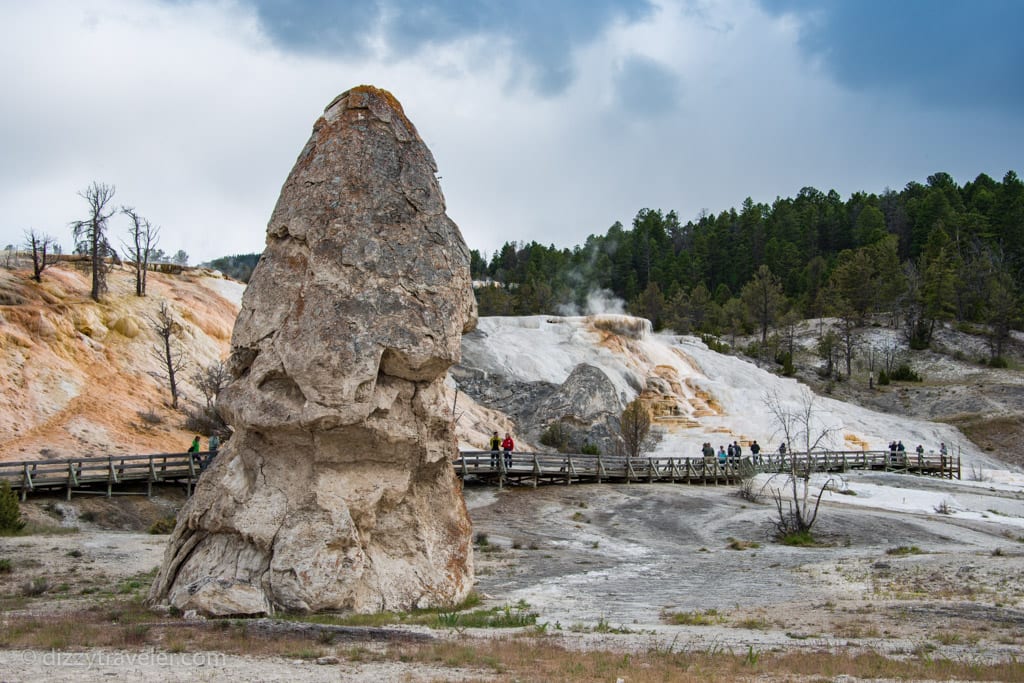
Liberty Cap, A dormant hot spring cone
Liberty Cap is the best-known rock formation created by the hot spring in the lower terrace of Mammoth Spring. The 37 feet hight hot spring cone was named in 1871 for its similarity to the pointed caps worn during the French Revolution.
Cistern Spring
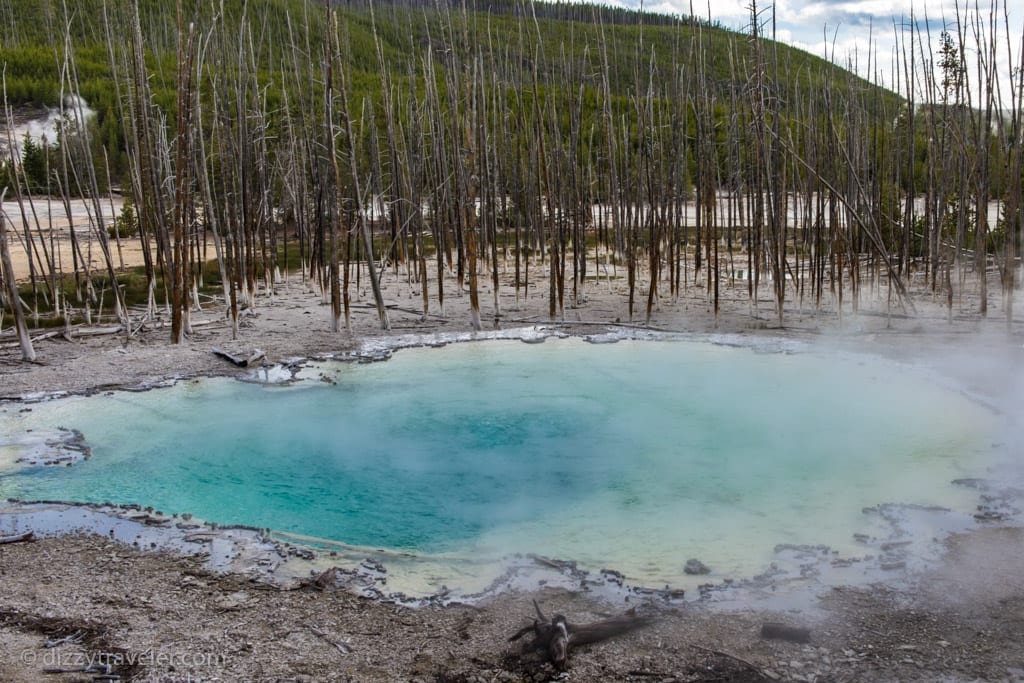
Hot springs create different water temperature environments for living things. Cistern Spring’s brown, orange, and green colors represent species of visible algae and bacteria, each requiring a different temperature environment.
Wildlife Watching
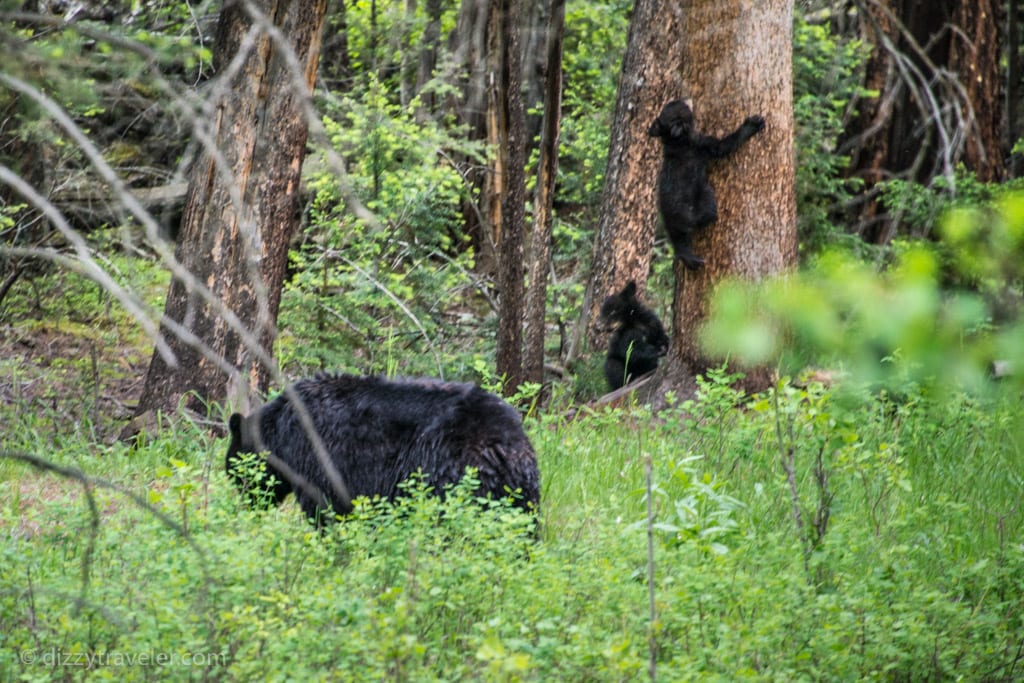
I saw few bison along the way, in addition to a bear family up close, a few deer and elk. As I passed by the Tower Junction, I decided to pull over my car to watch a few baby bears playing right along the road! They were climbing up and down a tree and jumping around with their parents watching them closely.
Watch Old Faithful Geyser
It’s a tradition to watch Old Faithful Geyser erupt in Yellowstone National Park. Tourists from all over the world visit the park to view this famous geyser. The park rangers predict the timing of the geyser eruptions. Old Faithful may stop erupting someday as the thermal features change constantly, but Yellowstone conserves the natural geologic processes so that tourists continue to enjoy this natural system.
Stroll Through Norris Geyser Basin
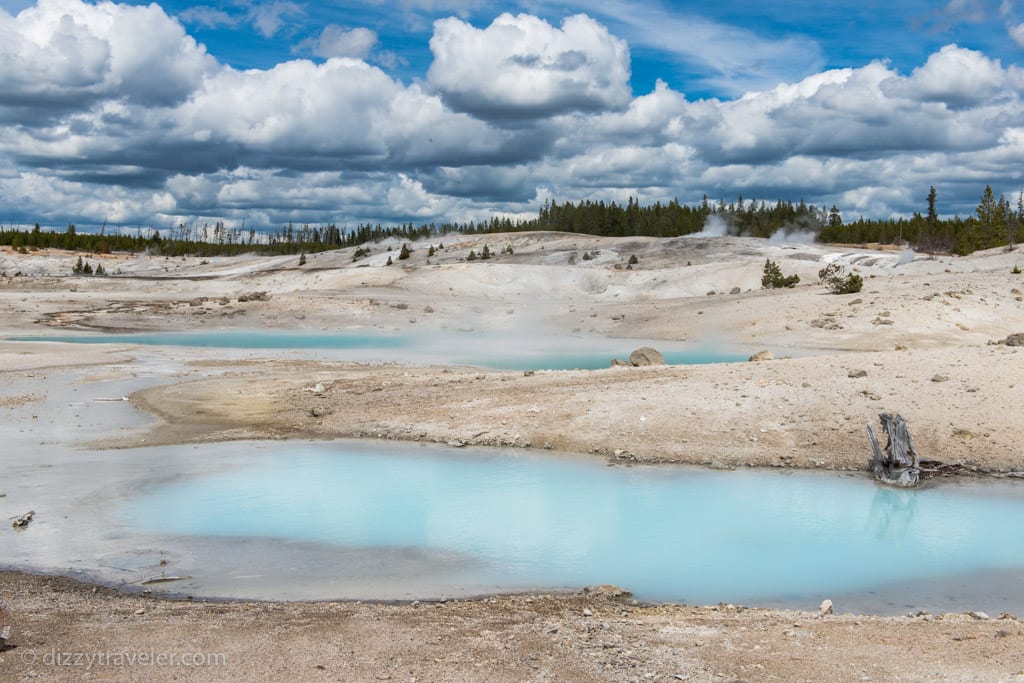
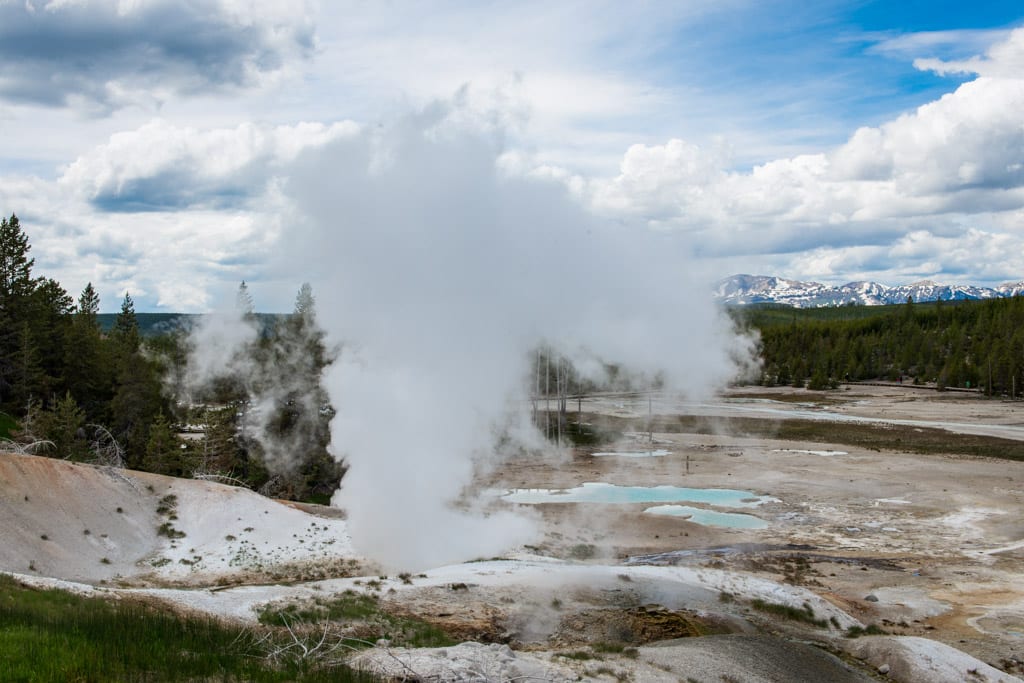
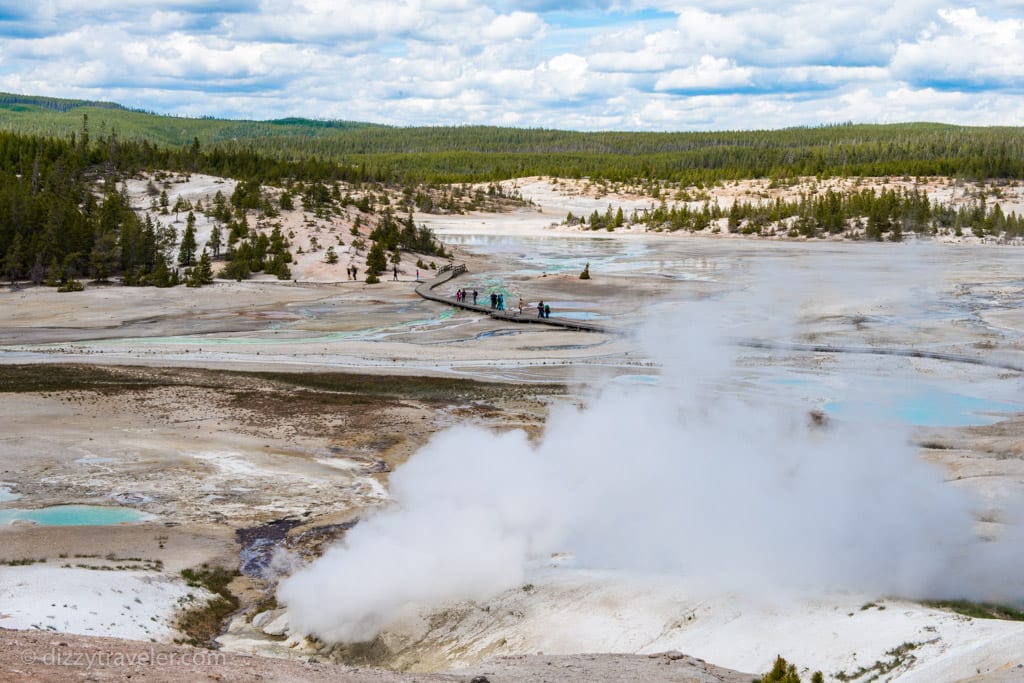
Norris Geyser Basin is the oldest, hottest, and most efficient of Yellowstone’s thermal areas. The features in the basin change daily, with frequent disturbances from seismic activity and water fluctuations. The vast majority of the water at Norris is acidic, including very rare acid geysers. Steamboat geyser is the tallest in the world, goes as high as 300-400 feet (91-122 m), and Echinus Geyser (pH 3.4 or so) are the most popular features. Take the boardwalk from the parking lot. In summer, you may end up parking in one of those overflow parking sites than walk about half a mile to the site.
Hayden Valley
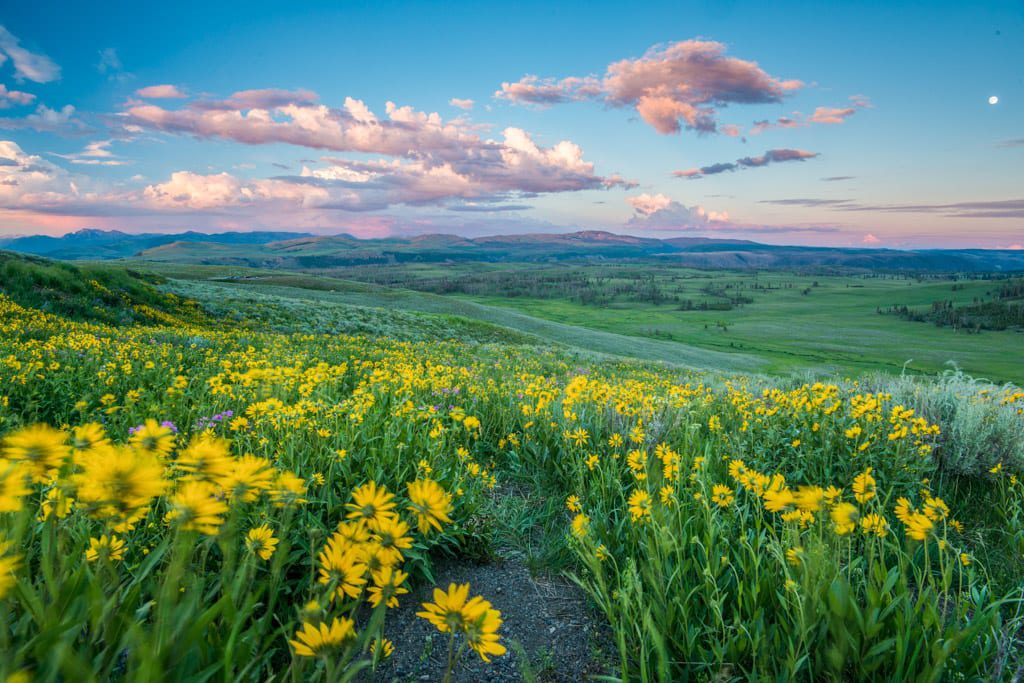
Hayden Valley is about 50 square miles of the valley in National Park located around Yellowstone River between Yellowstone Falls and Yellowstone Lake. The valley is truly beautiful, particularly the scenic drive that crosses Grand Loop Road south between Canyon Village and Yellowstone lake. To enjoy it to its fullest, just take your time, as there are loads of pullouts along the road to stop and use your camera to take pictures of bison, wolves, bears, deers, elks, and other animals in the wide-open meadows. You will undoubtedly face traffic due to bison crossing the road or just roaming alongside the way.
Grand Prismatic Spring
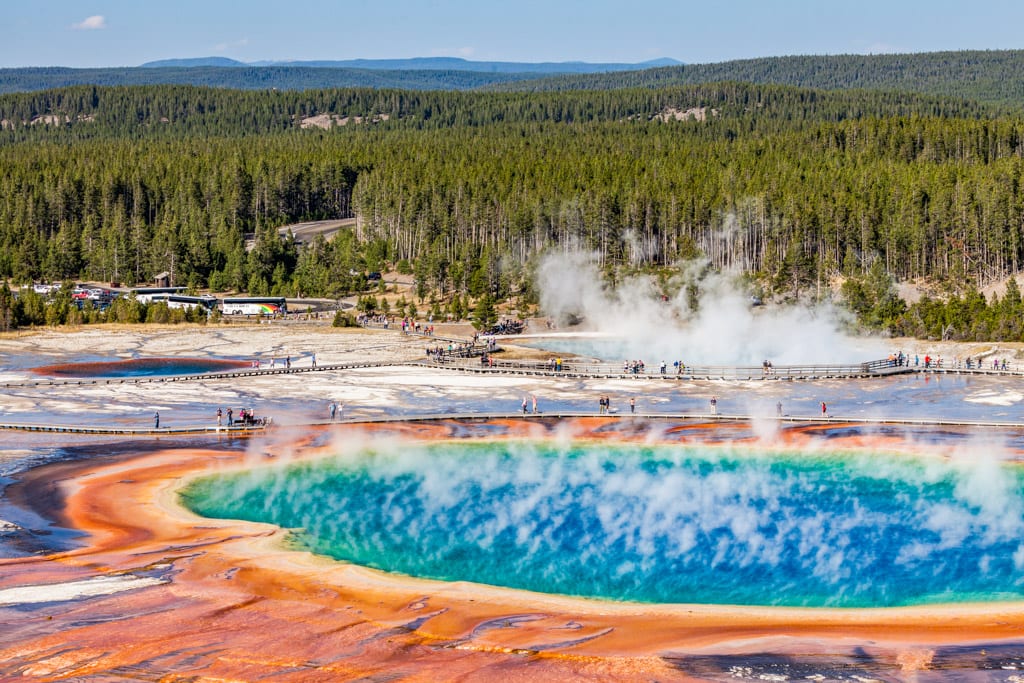
Grand Prismatic Hot Spring in Midway Geyser Basin is one of the most photographed thermal features in Yellowstone. Definitely due to its crazy-bright colors and gigantic size. The third-largest spring in the world is larger than a football field at 360 feet long and 160 feet wide. Boiling water jets 121 feet from a crack in the Earth to reach the spring’s surface. The hot spring has bright bands of orange, yellow, and green ring the deep blue waters in the spring.
Gibbon Falls
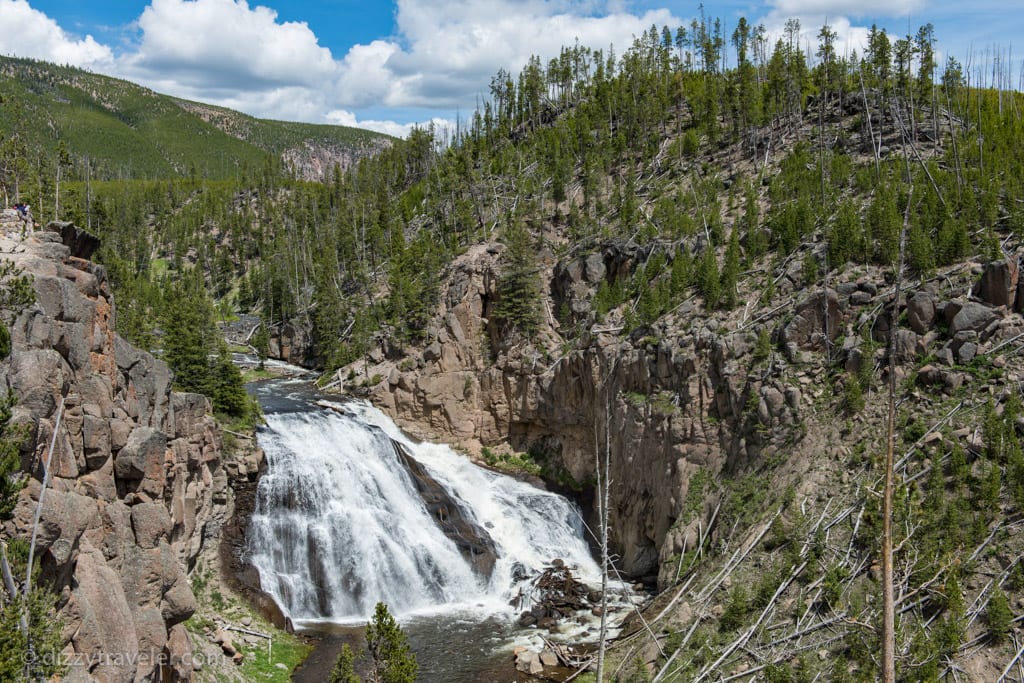
Gibbon Falls is located on the Gibbon River in the northwestern part of Yellowstone National Park. You can’t miss it should be on your way between Norris Geyser Basin and Madison Junction when traveling on Grand Loop Road. Make a quick roadside stop to view Gibbon falls that plunge about 84 feet to create a great view.
Tower Falls
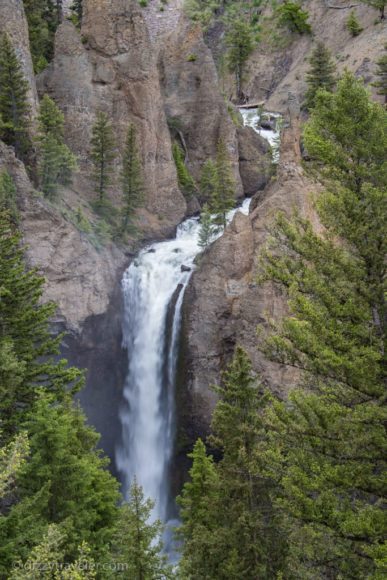
Tower Fall, one of the most famous falls in the park, is located in the northeastern region of Yellowstone National Park. The viewpoint is roughly 100 yards from the parking area from where visitors can enjoy the 132 feet plunges that create a spectacular scene. The fall was named after the rock pinnacles at the top of the fall.
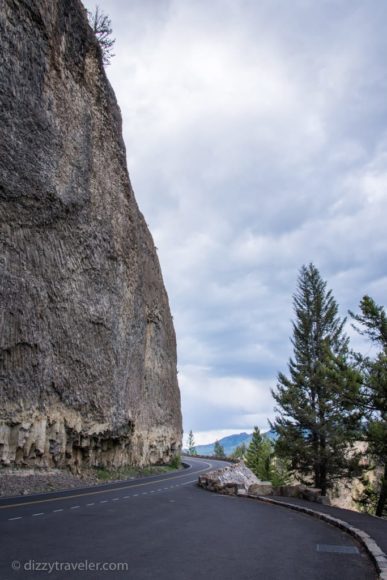
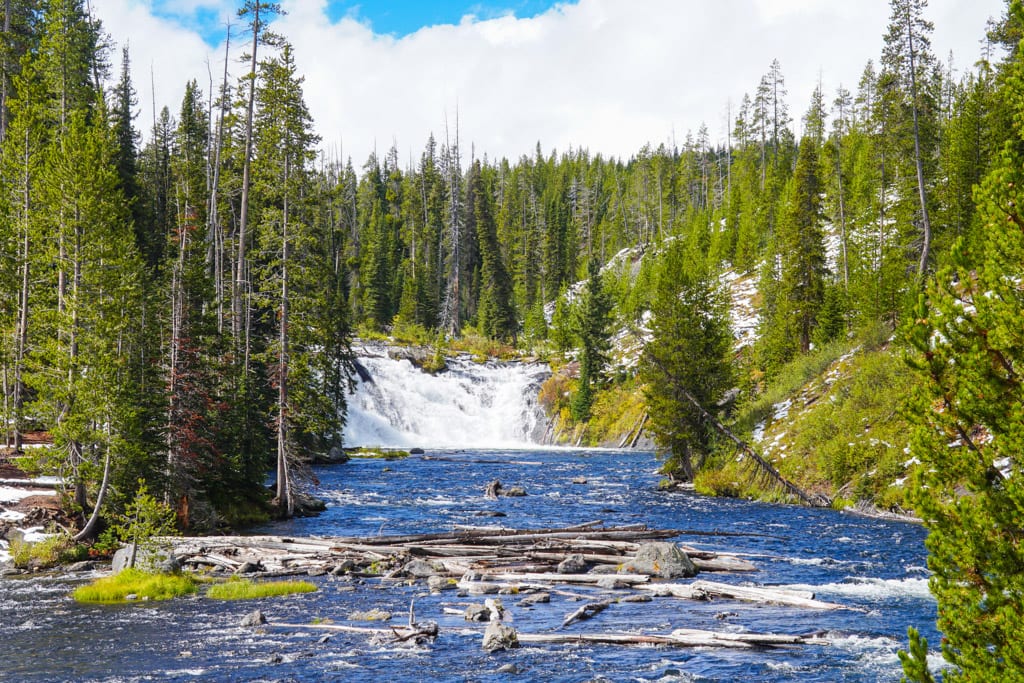
Lewis Falls
The Lewis Fall is located halfway between the south entrance and the grant village. The falls drop approximately 30 feet and are easily seen from the road or easily accessible from parking lots on each side of the lewis river bridge.
What Else to do in Yellowstone
Day Hikes in the Canyon Area
There are many trails suitable for short and extended hikes into Yellowstone’s backcountry begin in the canyon area.
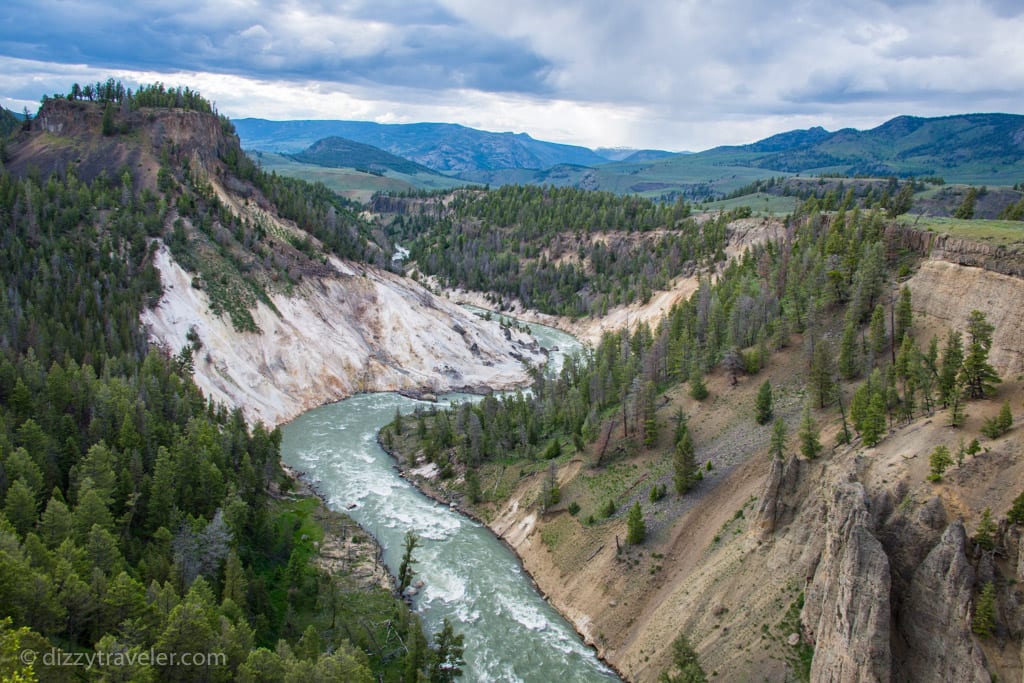
Ribbon Lake Loop
Park at the Uncle Tom’s Point Parking Area. The trail beings across the road to the south at the Clear Lake trailhead. The total loop distance is 5.8 miles (9 km), estimated time about 3-4 hours, and the difficulty level is moderately easy.
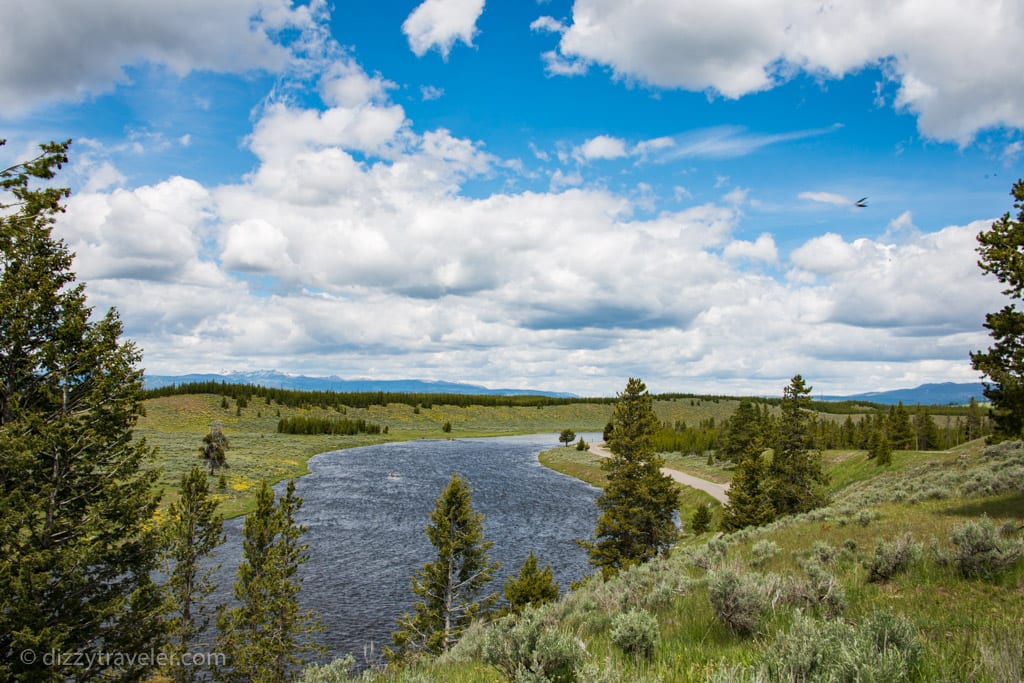
Howard Eaton Trail
Howard Eaton Trail covers Cascade, Grebe, Wolf, and Ice lakes, the total distance, a one-way trip is 10.7 miles (17.5 km). Estimated time 5-6 hours. The level of difficulty is moderately easy.
Grebe Lake Trail
A more direct route than the Howard Eaton Trail, this trail follows an old fire road through meadows and forest. Distance 6.2 miles (9.8 km), estimated time: 3-4 hours and the difficulty level is Moderately easy.
Observation Peak
This is a hike to a high mountain peak for an outstanding view of the Yellowstone wilderness. The trail passes through open meadows to Cascade Lake where wildflowers abound, and wildlife is often seen. Beyond the lake, the trail climbs 1,400 feet in 2.6 miles through the whitebark pine forest. Total roundtrip distance is 9.6 miles (15 km), estimated time about 5 hours, and the difficulty level is strenuous, 1400 foot (425 m) vertical rise in 2.6 miles (4.1 km).
Seven Mile Hole
Seven mile Hole trail passes both dormant and active hot springs. The only reliable water source on the trail is the Yellowstone River. Total round trip distance is 10 miles (16 km), estimated time about 5-8 hours, and the difficulty level is strenuous.
Mt. Washburn Dunraven Pass
Starting at the Dunraven Pass Trailhead, you ascend Mt. Washburn on a trail with spectacular views. Look for bighorn sheep and wildflowers. Stay on the trail to avoid destroying fragile alpine vegetation. Total roundtrip from Dunraven Pass is 6.0 miles (9.6 km), estimated time 3-6 hours, and the difficulty level is strenuous. Be aware of lightning above the treeline. There is no access to water along this trail.
Where to stay in Yellowstone National Park
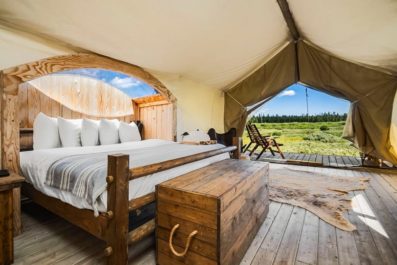
Under Canvas Yellowstone, West Yellowstone, MT
Under Canvas Yellowstone is nestled at the west entrance of Yellowstone National Park, this charming resort offers easy access to hiking and fishing. A restaurant and bar are located on-site. All tents and teepees offer views of wildlife and nature.
Without electricity, Yellowstone Under Canvas offers teepees as well as luxury tents. Select tents feature a wood stove and private bathroom equipped with a shower, flushing toilet, and spa products.
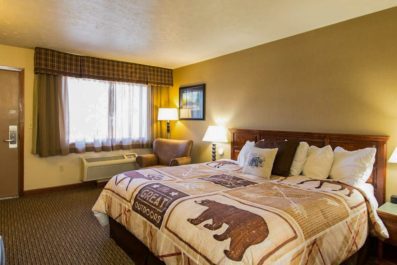
Crosswinds Inn, West Yellowstone, MT
Crosswinds Inn is located within walking distance of numerous restaurants and shops, Crosswinds Inn is located in the center of West Yellowstone, Montana. The West Entrance to Yellowstone National Park is 0.9 miles away and 30 miles from Old Faithful Geyser. Bozeman Yellowstone International Airport is 91 mi away.
My Opinion and Last Word
Have you been to Yellowstone National Park? Any cool tips to share?
Book Your Sightseeing Trip
With a multitude of beautiful places to visit and a range of exciting sightseeing activities, you are sure to create unforgettable memories. To explore your options, simply click on the affiliate link below.